Monday, 13 November 2017

Explaining anime's visual symbols

Here's another fascinating essay by Chris Kincaid.
This time Chris entertains us on manga and anime's visual vocabulary.


Anime has its own visual vocabulary that can be hard to understand. Anime makes use of line, color, and deformations to convey emotions and action. Most anime watchers take these pictorial words for granted. Some, like speed lines, are easier to understand than a character suddenly sprouting cat fangs or having blood bursting from the nose.

These oddities come from manga where artists had to figure out ways to convey inner emotions and action using limited methods. Unlike prose, where you can get into the character’s mind, manga has the reader on the outside. Because of this, artists worked out ways to convey a person’s thoughts using external cues. After all, thought bubbles can only do so much when space is limited. Manga’s design emphasizes fast, cinematic reading. It sits between books and film, so it uses as much pictorial words as possible, just as film does.
Let’s look at some of these techniques.


Speed Lines

How would you show action in a frozen medium like manga? Artists will sequence action across various panels to lend the illusion of motion. It works the same way as in anime, except the manga artist can’t draw hundreds of frames and have the reader make a flip book of them. Instead, they rely on speed lines combined with action key frames—the most important moments of action. Think of speed lines as visible air swirling because of the character’s movement. They can be used for comedic effect or accent an intense action sequence.


Abstract Background Patterns
Sometimes the background of an anime will abruptly change to patterns of flowers or stripes, or other images. What the patterns mean can depend on the context of the anime. Some images have meaning specific to a certain story, such as floating stylized heads of a certain character laughing. Changing the background in this way emphasizes what the character feels: energetic, sad, happy, concerned, sick. Fast animations or twirling spirals show how quickly the character’s mind is working, much like gears in a clock. Wavy lines show irritation or upset emotions. Colors such as bright red are used for anger. Darker colors like purples or blues are used to show the characters are feeling sick, upset, or depressed.

Sparking a Rivalry

Why do characters shoot laser beams from their eyes at each other? In English, we have an idiom—sparking a rivalry—that anime takes literally. Characters’ aren’t actually shooting lasers, except in some comedies. Rather, this represents their animosity for each other. Their gazes fight with each other. This image makes sense. We’ve seen people stare daggers at each other (another idiom) when they dislike each other.
Naruto and Sasuke are a good example of this visual!

Popping Vein

Perhaps one of the most seen visual symbol in anime, the Popping Vein is a series of four U-shapes combined to create a cruciform. They appear over hair, foreheads, and sometimes hands. The Popping Vein has only one emotion: anger. It comes from how some people have veins that pop out in their temples when they are angry or their blood pressure rises. Manga uses the four-U shapes as minimal shorthand for this biological effect.

By Anirage.svg: Brightster derivative work: Keith111 (Anirage.svg)
 [Attribution], via Wikimedia Commons

Sweat Drop

Another common symbol in anime, the sweat drop—a large droplet of blue over a character’s hair or face—shows embarrassment or anxiety or confusion. Context determines which of the three. Sweat drops combine with blush lines (lines of red color below the eyes) and with popping veins to help clarify the character’s feelings. Sweat drops and popping veins show anxious or confused anger. However, most of the time, embarrassment and anxiety combine. The size and number of sweat drops shows the level of the feeling. Large drops mean the feeling is overwhelming.

Cat Mouth

Usually you’ll see this with female characters. It is a visual play on the idiom ‘She’s being catty today.’ Catty characters are feeling mischievous. The cat mouth usually combines with dialogue or actions that invoke a sweat drop or some other anxious reaction in another character. Sometimes the cat mouth will appear when a female character is feeling sexually aroused and is acting catty about it, much to the distress of others.

Nose Bubble

Japanese anime are frequently using nose bubbles when a character has fallen asleep. They are the equivalent of the ZZzzZZ sleep symbol. It’s not an exclusively Japanese sign, and the trope is found in many western animations as well. While a character sleeps, the nose bubble will bob, and it will bust when the character wakes. I’m not sure I’d like to see the real-life inspiration for this one.

Ghost Balloon

Similar to the Nose Bubble, the Ghost Balloon comes from a person’s mouth. The symbol appears when a character is injured, shocked, or horrified. They are ‘dying’ from it. The Ghost Balloon represents the spirit escaping the character’s body. Sometimes, someone tries to stuff the soul back in for more comedy.

The Nose Bleed

The Nose Bleed is the most notorious and confusing symbol. Anime characters seem to spout blood at random, but their spurts are far from random. They represent sexual arousal. As blood rushes to…certain body parts…potential censorship ensured that a way had to be found to represent this arousal in a way that is not directly related to sexual images. Anime focuses on the face, so the idea of rising blood pressure combined with this to create the nosebleed. Manga writers used the effect for comedy—giant fountains of blood erupt from horny guys while girls suffer the embarrassment of trying to hide theirs. Embarrassment underpins much of anime’s humor.


Deformations

Deformations jar those new to anime. You’ll watch a show and out of nowhere the character suddenly looks different. Sometimes they are long and move like noodles; other times they deform to short characters with large heads (called chibi). Deformations show extreme emotion. The noodle transformation coupled with waving in the breeze means the characters are overwhelmed by the situation or simply don’t care. Deformations depend on situation. They lack standardization, so you’ll have to pay attention to the situation they appear within. Chibi usually mark a break in serious sections of the plot for comedy. You’ll see perverted men, for example, appear as chibi when they are being rambunctious. But you’ll also see these deformations during childhood flashbacks because of the cute quality of the deformation. Again, it depends on context.

Anime Symbolism

Anime has many other symbols such as the orz (the word looks like the action it names: a person collapsing in defeat). Some are standardized like the nosebleed, but you’ll also see symbols specific to an author’s work or animation studio. For example, the Tales of series of video games uses thought bubbles that contain various anime symbols such as the Sweat Drop but also symbolism unique to the series, such as wavy purple lines. These symbols seek to convey emotions in an immediate way. The results can be confusing for those new to the medium, but they can also be effective once you get onto them.
The trick is to keep watching and reading. Exposure to various styles of anime symbols will help you build up a mental reference book of the sorts of situations these symbols appear. With time, they will become immediate indicators of character emotions and mental states. The funny part about this, you won’t realize you are making the connection. The symbols will become similar to reading this article—you interpret letters and words without much thought. You forget how you had to learn these symbols.
So, whenever a new anime fan asks you about them, remember that you had to learn the language at some point too. It’s a good opportunity to introduce someone else to the stories anime and manga convey.

Of cicadas and power lines

I've just found a very interesting piece Chris Kincaid wrote for the Japan Powered webside.
First-time travellers to Japan are always surprised - even fascinated - by the ubiquitous power lines and - if they come in summer - the loud cicadas.
Kincaid explains how these two things are used in anime, and why.


Anime loves long shots of power lines with the sound of cicadas chirruping in the background. It seems like an odd subject to focus upon. After all, power lines and transformers aren’t exactly beautiful unless you are some kind of electricity nerd. That’s a lovely distribution transformer! Just look at the center-tapped secondary winding, and how well it produces power for single-phase three-wire homes.
(Call me odd but I actually find them quite beautiful - Gianni)


Ehm, anyway, these scenes have an important purpose besides eating up air time: invoking atmosphere. The majority of Japan’s power lines are above ground, so it’s common to look up at the broiling summer sky and see the stringy foundation of modern society (Baseel, 2014).
 
Power lines and the cicada symphony that accompany them allow anime and manga writers to emphasize a fleeting moment while establishing atmosphere. The scene represents fragile presentness. Often, these scenes appear after a momentous event happens to the main character that leaves them overwhelmed and uncertain. Power lines and cicadas act as a period to the character’s emotions, a full stop that hammers home the crushing impact of the event.

Creative Commons Zero (CC0) license


Power lines are fairly new when compared to the sounds of the cicada. The noisy bug appears throughout Japanese literature, even as far back as the world’s first novel—the Tale of Genji:
Where the cicada casts her shell
In the shadows of the tree,
There is one whom I love well,
Though her heart is cold to me.
Without the cicada, power line scenes would lack their effectiveness. Cicada can be noisy creatures. Males can get up to 95 decibels, about the same noise level as a subway train. Some species spend between 13 and 17 years underground before they emerge to mate. After 3-4 weeks of mating and noise-making, they die. Males make all the noise by using a membrane on their abdomen called a tymbal. The vibration of this membrane generates the noise Japanese writers loved and hated (Milius, 2013; Edoh, 2014).


Japanese writers focused on the largest and loudest cicada—kumazemi, which can measure 7 cm long [about 3 inches] (Holden, 2007). Despite their size and noise, cicadas aren’t dangerous. In fact, they can’t bite, hide, or fly well. Their only defense is sheer numbers (Milius, 2013). And these numbers make summers hum.

Creative Commons Zero (CC0) license


According to Lefcadio Hearn (1900), cicada-catching was a traditional summer pastime for children. He accounts how captured cicada despair:
The sound made by some kinds of semi (cicada) when caught is really pitiful, — quite as pitiful as the twitter of a terrified bird. One finds it difficult to persuade oneself that the noise is not a voice of anguish, in the human sense of the word “voice,” but the production of a specialized exterior membrane. Recently, upon hearing a captured semi scream, I became convinced in quite a new way that the stridulatory apparatus of certain insects must not thought of as a kind of musical instrument, but as an organ of speech, and that its utterances are as intimately associated with simple forms of emotions, as are the notes of a bird — the extraordinary difference being that the insect has its vocal chords outside.
Whenever manga and anime use the sound of summer cicada, they touch on this tradition and on a branch of traditional Japanese poetry. Many of these poems are short and attempt to mimic the sound of the cicada. The 18th-century poet Yokai Yayu notes:
The chirruping of the cicada
aggravates the heat until I wish
to cut down the pine-tree on which it sings.
While some poets enjoyed the cicada, many more were like Yokai and found the bugs annoying:
Meseems that only I, —
I alone among mortals —
ever suffered such heat!
Oh, the noise of the cicada!
Gone, the shadowing clouds! —
again the shrilling of cicada
rises and slowly swells, —
ever increasing the heat!
Fathomless deepens the heat:
the ceaseless shrilling of cicada
mounts, like a hissing of fire, up to the motionless clouds
Anime tries to capture this by making the cicada’s background noise loud in relation to characters’ conversations. This isn’t a sign of bad sound mixing, but it pulls from a tradition of cicada annoyance in Japanese literature.


I’ve seen some anime fans speak about scenes of power lines with the chirruping of cicadas as metaphors for how everything interconnects. While this may be true in some stories, these scenes primarily seek to invoke nostalgia and provide a period at the end of an emotional event. These scenes convey relentless heat in a visually poetic way. They use what many people consider an ugly necessity to suggest a fragile, beautiful moment in a character’s life.


Power line scenes provide a space for reflection. After all, most of us don’t see power lines and eventually grow deaf to the sound of summer cicada. Anime and manga force us to take a moment to notice these mundane parts of life and consider the fact they aren’t mundane at all. This act of reflection acts as a stand in for what the character may well be feeling as they reflect on events they’ve experienced. Power lines and cicadas call us to awareness.
References
Baseel, C. (2014). Why does Japan have so many overhead power lines? JapanToday. http://www.japantoday.com/category/lifestyle/view/why-does-japan-have-so-many-overhead-power-lines
Edoh, K., (2014) Modeling Cicada Sound Production and Propagation. Journal of Biological Systems. 22 (4) 617-630.
Hearn, L. (1900) Shadowings. Boston: Little, Brown, and Company.
Holden, C. (2007) Random Samples. Science, New Series. 317 (5843) 1301.
Lewis, L. (2007). Amorous cicadas drown out sound of silence. The Times.
Milius, S. (2013). Mystery in Synchrony: Cicadas’ odd life cycle poses evolutionary conundrums. Science News. 18 (1) 26-28.
Shikibu, MurasakiThe Tale of Genji. N.p.: Tuttle, 2006.


Source: https://www.japanpowered.com/anime-articles/power-lines-and-cicadas-in-anime

Toei Hero World has closed

Bad news for fans of tokusatsu live-action superhero TV shows and movies: Toei Hero World has closed down.
Born from the collaboration between the Toei film studio and amusement park and game center operator Namco, this hybrid park/museum opened in Chiba Prefecture in 2013.

The amusement park side of the place was mainly geared toward children (some attractions were actually off-limits unless you were really small) but the museum was a must see for Kamen Rider and Super Sentai fans.
Most of the costumes and props on display had been used for the actual productions, adding one more thrill to the visit.
Upon buying the ticket you received an energy power bracelet. Whenever you  touched certain spots, the bracelet activated some of the over 100 characters scattered around the place.
Overall the exhibition space was rather small but it felt much larger thanks to the clever layout, with battle dioramas and full-sized heroes surrounding you from everywhere.
 Last but not least, the shop sold not only the usual exclusive goods (cups, cookies, t-shirts, etc.) but even some Premium Bandai merchandise that was generally sold only online. 

Monday, 30 October 2017

Pikachulk!


For several years now, coloring books have become extremely popular even among adults, and Pokemon nurie (as these books are called in Japan) are no exception.

Some people, though, go beyond the simple task of reproducing the original images.

Take, for instance, Bankokukun. This Japanese artist has taken this typical Pikachu image


... and turned it into this:


He posted it on Twitter and his new beefed-up Pikachu soon went viral.
https://twitter.com/bankokukun

********************************

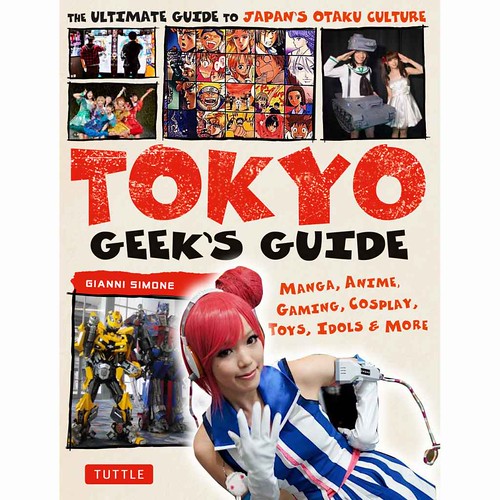
In other news, I was interviewed about my Tokyo Geek's Guide.
You can read it below:


Please tell us about your book, Tokyo Geek's Guide...
This is an otaku guide to Tokyo. I tried to cover every side of otaku fandom as well as I could. The first chapter briefly introduces each of the six main otaku genres (manga, anime, video games, toys, cosplay, and idols) from a historical perspective. It provides a few tidbits of trivia and cultural insight (e.g., how Akihabara evolved from a hub for radio enthusiasts to the modern-day gamer haven it has become) while highlighting Japan's influence abroad and trying to point out how each genre may evolve in the future.  

This is followed by the book's main, travel guide part. In each chapter (devoted to one of Tokyo's major otaku areas) I show interesting things to see and do – not only things to buy but anime-related spots, cosplay and other otaku events, manga museums, and libraries. The main difference from your typical travel book is that I actually guide the reader on a walk through each area in a sort of geeky urban exploration.
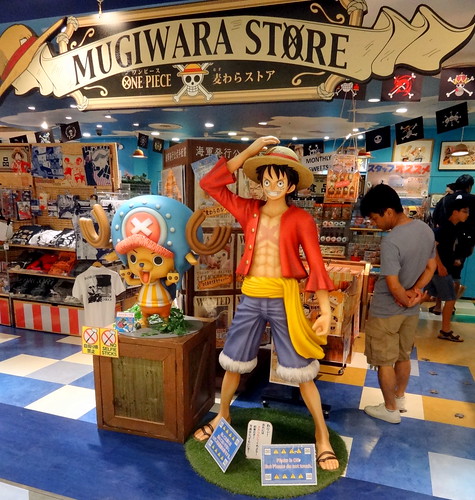
One Piece Mugiwara Store in Shibuya. From Love Tokyo's Otaku Culture? Read this.
One Piece Mugiwara Store in Shibuya
 
What inspired you to write this book?
This project was born from my personal need to find otaku-related information. While there are hundreds of general travel guides on the market – some of them covering very specialized subjects – I discovered that nobody had ever covered Tokyo from an otaku point of view. There are many people who are more knowledgeable than me, but they apparently prefer to dig deeper and pen books on manga philosophy or the moe concept. Entry-level otaku and people who just want to explore Tokyo are left with surfing the Internet for information. Of course, now you can find a lot of things online, but the Internet can be very dispersive and unreliable. Also, a lot of important information is still only available in Japanese. So I decided to gather all these loose ends and put them together in book form.  

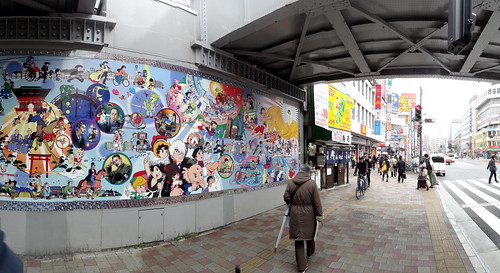
Tezuka Productions mural in Takadanobaba, Tokyo. From Love Tokyo's Otaku Culture? Read this.
Tezuka Productions mural in Takadanobaba, Tokyo
 
What is your background (and beginning interest) in otaku culture?
I belong to the very first generation of European anime fans. The first Japanese TV series (Grendizer, Mazinger Z, Heidi, etc.) appeared in France and Italy (my home country) back in the summer of 1978, when I was in junior high school. I still remember my shock the first time I saw those alien-looking sci-fi anime that were seemingly coming from another planet. At the time, my family used to have dinner in our kitchen which doubled as a dining room. But our TV was in the living room, and Grendizer (Goldrake, as it was called in Italy) was broadcasted at dinner time. So my parents (bless them) let me eat my food alone in the living room.

What might readers be surprised to learn about otaku culture, and general geekdom in Tokyo?
What a trip to Tokyo really makes apparent is how much otaku "sights and sounds" are part of Japanese life, from giant billboards and graffiti to the jingles in some train stations. Manga- and anime-inspired imagery is so pervasive it can literally be found everywhere and is used to sell products, as well as advise people on socially sensitive issues.

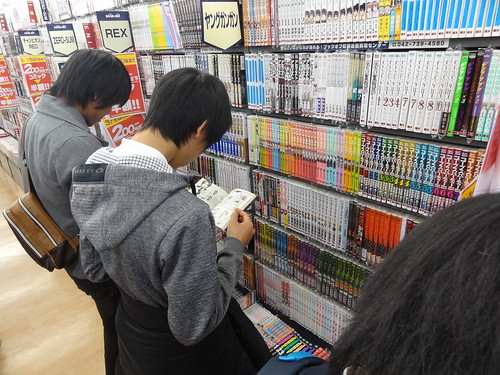
Fans spend hours reading their favorite manga in bookstores... without buying them. From Love Tokyo's Otaku Culture? Read this.
Fans spend hours reading their favorite manga in bookstores... without buying them
 

Another thing worth noting is how few concessions Akihabara and other otaku districts make to mainstream western tastes. Though local shops welcome the growing number of foreign customers, many if not most of the things they sell are for local hardcore fans, which means you will probably discover many things you have never seen—which is not necessarily a bad thing. Even as far as Western pop culture is concerned, there is precious little to be found except what the Japanese themselves like (i.e., Star Wars and Disney).
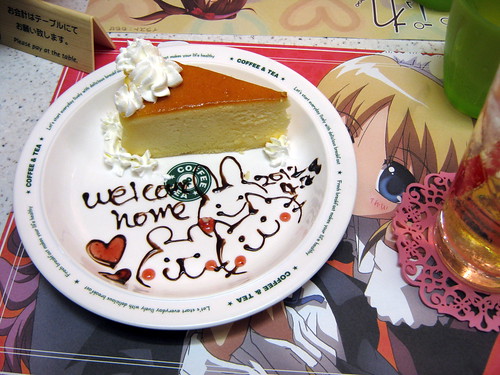
Maid cafe food. Photo: La Japonie Facile. From Love Tokyo's Otaku Culture? Read this.
Maid cafe food. Photo: La Japonie Facile

We're all about the research - what were the joys and challenges of finding SO many cool things that you've included in this book?
I would say for many writers the planning stage (when the book slowly takes shape) and the actual research are the most interesting parts. The writing itself, in comparison, is a sort of anticlimax (George Orwell famously went so far as to say that writing a book can be "a horrible, exhausting struggle"). For me, researching the book was like going on a sort of treasure hunt, so it was a lot of fun. This said, dealing with Japanese red tape can be exhausting. For each copyrighted image I wanted to use in my book, I had to exchange endless mails with companies, museums, etc. Luckily, my Japanese wife helped me navigate this Kafkaesque maze.

What's up next for you?
The Tokyo Geek's Guide has gathered a lot of positive feedback, so I'm already working on another otaku-related project. However, geek culture is not my only interest, and I hope to be able to publish a different kind of book in the near future; a sort of oral history of Tokyo based on my journalistic work.

Is there anything else you'd like to share?
 I'm a regular contributor to Zoom Japan magazine (let's say I'm their main Man in Japan). Anybody who is interested in all things Japan should definitely check out our website: www.zoomjapan.info. Last but not least, if readers of my book have any feedback to share (either good or bad) they can reach me at bero_berto[at]yahoo.co.jp.  


Here's the link to the original post:
https://www.wanderingeducators.com/best/traveling/tokyo-otaku-culture.html


Tokyo Geek's Guide is available here:
https://www.amazon.com/Tokyo-Geeks-Guide-Cosplay-Ultimate/dp/4805313854/ref=sr_1_1?s=books&ie=UTF8&qid=1507453332&sr=1-1&keywords=tokyo+geeks+guide


Sunday, 8 October 2017

Wandering Educators interview

I was interviewed by Dr. Jessie Voigts of the Wandering Educators website.

We mainly talked about my otaku background, and why and how the guide was born.


Do you love cosplay, manga, anime, fandom memorabilia, and toys? Perhaps the center of your fandom universe lies in Tokyo, Japan. If so, you probably identify as Otaku. If you are otaku, or can relate to it, then I have the book for you! If you aren't into otaku culture yet, you soon will be, after reading Tokyo Geek's Guide: Manga, Anime, Gaming, Cosplay, Toys, Idols, & More, by Gianni Simone. Be forewarned: I LOVE THIS BOOK.Love Tokyo's Otaku Culture? Read this.
"Tokyo is ground zero for Japan's popular "geek" (otaku) culture - a phenomenon that has now swept across the globe. This is the most comprehensive guide ever produced to Tokyo's geeky underworld. It provides a comprehensive run-down on each majoy Tokyo district where geeks congregate, shop, play, and hang out - from hi-tech Akihabara and trendy Harajuku, to newer and lesser-known haunts like chic Shimo-kita and working-class Ikebukuro."


What Simone has created is marvelous - his Tokyo Geek's Guide is the best guidebook I've ever read. He's an author that wears many hats in this book - travel guide, translator, sparker of interest, photographer, fan, wiki, a guide to Japanese language and culture, and otaku. When you combine all this expertise into one book, that book is a shining lodestar for fans of otaku culture. Reading it is like coming home - and finding a slew of new cousins had moved in. You're simultaneously delighted, intrigued, and want to stay up all night talking, discovering, laughing. 
Here's what I love about this book:
* It clearly explains the many aspects of otaku fandom
* It's a complete travel guide to many areas of Tokyo that are unusual, hard to discover, and often not in English
* Delving deeply into each neighborhood, the book gives clear directions, information, and inspiration
* The photos are inspirational - not only for traveling to and around Tokyo, but to up your otaku game
* Don't know what to do, how to order, how to play, or other cultural norms and mores? Simone has outlined everything so clearly that you feel comfortable in a new place - even calling it your own, once you've got it down
* It helps you find your tribe - even if that tribe is halfway around the world

As you may surmise, highly recommended.

We were lucky enough to catch up with Simone, and ask him about the book, inspiration, interest in otaku culture, the joys and challenges of research, and more. Here's what he had to say: 


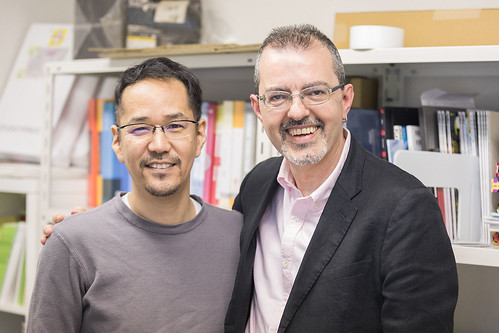
Gianni Simone and "Napping Princess" director Kenji Kamiyama. Photo: Benjamin Parks. From Love Tokyo's Otaku Culture? Read this.
Gianni Simone and "Napping Princess" director Kenji Kamiyama. Photo: Benjamin Parks


Please tell us about your book, Tokyo Geek's Guide...
This is an otaku guide to Tokyo. I tried to cover every side of otaku fandom as well as I could. The first chapter briefly introduces each of the six main otaku genres (manga, anime, video games, toys, cosplay, and idols) from a historical perspective. It provides a few tidbits of trivia and cultural insight (e.g., how Akihabara evolved from a hub for radio enthusiasts to the modern-day gamer haven it has become) while highlighting Japan's influence abroad and trying to point out how each genre may evolve in the future.  

This is followed by the book's main, travel guide part. In each chapter (devoted to one of Tokyo's major otaku areas) I show interesting things to see and do – not only things to buy but anime-related spots, cosplay and other otaku events, manga museums, and libraries. The main difference from your typical travel book is that I actually guide the reader on a walk through each area in a sort of geeky urban exploration.
One Piece Mugiwara Store in Shibuya. From Love Tokyo's Otaku Culture? Read this.
One Piece Mugiwara Store in Shibuya
 
What inspired you to write this book?
This project was born from my personal need to find otaku-related information. While there are hundreds of general travel guides on the market – some of them covering very specialized subjects – I discovered that nobody had ever covered Tokyo from an otaku point of view. There are many people who are more knowledgeable than me, but they apparently prefer to dig deeper and pen books on manga philosophy or the moe concept. Entry-level otaku and people who just want to explore Tokyo are left with surfing the Internet for information. Of course, now you can find a lot of things online, but the Internet can be very dispersive and unreliable. Also, a lot of important information is still only available in Japanese. So I decided to gather all these loose ends and put them together in book form.  

Tezuka Productions mural in Takadanobaba, Tokyo. From Love Tokyo's Otaku Culture? Read this.
Tezuka Productions mural in Takadanobaba, Tokyo
 
What is your background (and beginning interest) in otaku culture?
I belong to the very first generation of European anime fans. The first Japanese TV series (Grendizer, Mazinger Z, Heidi, etc.) appeared in France and Italy (my home country) back in the summer of 1978, when I was in junior high school. I still remember my shock the first time I saw those alien-looking sci-fi anime that were seemingly coming from another planet. At the time, my family used to have dinner in our kitchen which doubled as a dining room. But our TV was in the living room, and Grendizer (Goldrake, as it was called in Italy) was broadcasted at dinner time. So my parents (bless them) let me eat my food alone in the living room.

What might readers be surprised to learn about otaku culture, and general geekdom in Tokyo?
What a trip to Tokyo really makes apparent is how much otaku "sights and sounds" are part of Japanese life, from giant billboards and graffiti to the jingles in some train stations. Manga- and anime-inspired imagery is so pervasive it can literally be found everywhere and is used to sell products, as well as advise people on socially sensitive issues.

Fans spend hours reading their favorite manga in bookstores... without buying them. From Love Tokyo's Otaku Culture? Read this.
Fans spend hours reading their favorite manga in bookstores... without buying them
 

Another thing worth noting is how few concessions Akihabara and other otaku districts make to mainstream western tastes. Though local shops welcome the growing number of foreign customers, many if not most of the things they sell are for local hardcore fans, which means you will probably discover many things you have never seen—which is not necessarily a bad thing. Even as far as Western pop culture is concerned, there is precious little to be found except what the Japanese themselves like (i.e., Star Wars and Disney).
Maid cafe food. Photo: La Japonie Facile. From Love Tokyo's Otaku Culture? Read this.
Maid cafe food. Photo: La Japonie Facile

We're all about the research - what were the joys and challenges of finding SO many cool things that you've included in this book?
I would say for many writers the planning stage (when the book slowly takes shape) and the actual research are the most interesting parts. The writing itself, in comparison, is a sort of anticlimax (George Orwell famously went so far as to say that writing a book can be "a horrible, exhausting struggle"). For me, researching the book was like going on a sort of treasure hunt, so it was a lot of fun. This said, dealing with Japanese red tape can be exhausting. For each copyrighted image I wanted to use in my book, I had to exchange endless mails with companies, museums, etc. Luckily, my Japanese wife helped me navigate this Kafkaesque maze.

What's up next for you?
The Tokyo Geek's Guide has gathered a lot of positive feedback, so I'm already working on another otaku-related project. However, geek culture is not my only interest, and I hope to be able to publish a different kind of book in the near future; a sort of oral history of Tokyo based on my journalistic work.

Is there anything else you'd like to share?
 I'm a regular contributor to Zoom Japan magazine (let's say I'm their main Man in Japan). Anybody who is interested in all things Japan should definitely check out our website: www.zoomjapan.info. Last but not least, if readers of my book have any feedback to share (either good or bad) they can reach me at bero_berto[at]yahoo.co.jp.  


Here's the link to the original post:
https://www.wanderingeducators.com/best/traveling/tokyo-otaku-culture.html


Tokyo Geek's Guide is available here:
https://www.amazon.com/Tokyo-Geeks-Guide-Cosplay-Ultimate/dp/4805313854/ref=sr_1_1?s=books&ie=UTF8&qid=1507453332&sr=1-1&keywords=tokyo+geeks+guide


Friday, 6 October 2017

Otaku in love

According to both Japanese and foreign media, an increasing number of young Japanese people have lost any interest in love and sex.
On the otaku front, though, many kids out there are desperately looking for the love of their life - possibily someone who shares their passion for anime, manga, toys and games.


One of these love-seeking people, Hiro Takeuchi, came up with the simple but ingenious idea of organizing otaku matchmaking parties, or Otapa (short for otaku party) .
Only proven otaku are allowed. In fact participants must take a test to determine their otaku level on the official website. 
Guys have to shell out 8,000 yen (about $71) while ladies get in for only 2,500 yen ($22). 
Before the event, participants fill out a list of their favorite anime and video games, which they show to potential partners to help spark conversation.

The matchmaking parties were originally held only in Osaka twice a month, but more dates and cities have been added recently including Tokyo, Osaka and Nagoya.
Here's Otapa's website (Japanese only) http://www.otapa.jp/
The organizers being interviewed

Back in February, a rather expensive otaku matchmaking agency, Torakon, opened in Akihabara https://toracon.jp/.
The lovely Otapa staff


My Tokyo Geek's Guide is not going to show you how to romantically hook up with a local otaku, but you can make plenty of friends at the events listed in my book. Check it out!
https://www.amazon.com/Tokyo-Geeks-Guide-Cosplay-Ultimate/dp/4805313854/ref=sr_1_1?s=books&ie=UTF8&qid=1507278930&sr=1-1&keywords=tokyo+geeks+guide

You may also interested in these stories:

- an interview I gave about my book
https://otakutokyojp.blogspot.jp/2017/10/wandering-educators-interview.html
- a video about Comiket's old days
https://otakutokyojp.blogspot.jp/2017/07/comiket-nostalgie.html

- my interview  with In This Corner of the World director Sunao Katabuchi
https://otakutokyojp.blogspot.jp/2017/04/talking-hiroshima-blues.html