Showing posts with label interview. Show all posts

Monday, 19 July 2021

Hosoda Mamoru doesn't like the way women are portrayed in anime


A very interesting piece about anime director Hosoda Mamoru whose latest film, Belle, has just screened at the Cannes Film Festival. 

Mamoru Hosoda has bones to pick with both Steven Spielberg and Hayao Miyazaki, the other great Japanese animator to whom he is often compared.

Hosoda -- whose brilliantly humane "Mirai" got an Oscar nod three years ago -- has had enough of the way Hollywood treats the digital world and Miyazaki depicts women.

The dystopian tropes about the net that run through so many movies, including Spielberg's "Ready Player One", are not doing anyone any favours, particularly women, Hosoda told AFP at the Cannes film festival, where his latest feature "Belle" is premiering.

Father of a young girl himself, the Japanese master wants to empower her generation to take control of their digital destinies rather than cower in fear.

"They have grown up with the net... yet are constantly told how malevolent and dangerous it is," he said.

"Belle" is his riposte, a spectacular dive into the rollercoaster emotional life of a shy adolescent girl called Suzu, in a 21st century take on "Beauty and the Beast".

- Digital diva -

To her surprise, and everyone else's, Suzu becomes a pop diva called Belle in the virtual universe of an app called U.

Rather than being burned by online abuse and harassment as she acquires billions of followers, Suzu uses her online avatar to overcome the haters and her own hang-ups.

"Human relations can be complex and extremely painful for young people. I wanted to show that this virtual world, which can be hard and horrible, can also be positive," said Hosoda.

Suzu and her computer geek friend are far from the women that usually populate Japanese anime -- which is where Hosoda takes issue with Miyazaki, the Oscar-winning legend behind classics such as "Spirited Away".

"You only have to watch Japanese animation to see how young women are underestimated and not taken seriously in Japanese society," he said.

The director -- whose films are more grounded in social realities than Miyazaki's -- was brought up by a single mother, a rarity at the time.

#photo1

His 2012 classic "Wolf Children" is a paean to the fierce independence with which she brought up her little pack alone.

"It really annoys me to see how young women are often seen in Japanese animation -- treated as sacred -- which has nothing to do with the reality of who they are," Hosoda said, with evident frustration.

- Miyazaki bust-up -

Without naming Miyazaki, Hosoda was unsparing about the Studio Ghibli founder.

"I will not name him, but there is a great master of animation who always takes a young woman as his heroine. And to be frank I think he does it because he does not have confidence in himself as a man.

"This veneration of young women really disturbs me and I do not want to be part of it," he insisted.

He wants to free his heroines from being paragons of virtue and innocence and "this oppression of having to be like everyone else."

Hosoda and Miyazaki have history.

The 53-year-old was seen as the natural successor to Miyazaki after he was called in from the outside by Ghibli to direct the Oscar-nominated "Howl's Moving Castle".

But Hosoda walked out midway through to set up his own studio.

The director prefers stories that "show the good and the bad in people. This tension is what being human is all about."

Which is why he was also drawn to bringing "Beauty and the Beast" up to date.

"In the original story the Beast is the most interesting character. He is ugly and has this violence but he is sensitive and vulnerable inside too.

"Beauty is just a cipher. It is all about her looks. I wanted to make her as complex and rich."

That duality is also there in his fascination with the digital world that began with his first hit, "Digimon: The Movie".

"I keep returning to the internet. First with 'Digimon' and then with 'Summer Wars' in 2009 and now again."

And he is more convinced than ever that we cannot keep dismissing it as the source of all evil.

"Young people can never separate themselves from it. They grew up with it. We have to accept it and learn to use it better."

************************ 

In other news, my second book, Otaku Japan, is out now. Check it out!

And last but not least, I have launched yet another online project on Substack, Tokyo Calling. As you are reading this blog, you are probably into all things Japanese, so please have a look and if you like it, subscribe (it's FREE) and spread the word about it. Thanks! 

Saturday, 5 June 2021

Manga rules

This is a very interesting article that recently appeared in Publishers Weekly

*******************************************************************************************

When the pandemic hit last March, manga publishers in North America were left with an uncomfortable choice: should they cut back on their book releases or stick it out and hope that things get better soon? But it turned out that while people were stuck at home, they started reading and buying more manga. And not just a little but a lot more manga.

According to NPD BookScan, the manga buying spree continues in 2021. Sales of print manga titles in the U.S. increased by 3.6 million units in the first quarter of 2021 compared to the same period in 2020.

“Last year was our biggest year ever, despite the pandemic, and 2021 numbers are off the charts,” says Lianne Sentar, sales and marketing manager at Seven Seas Entertainment. “Based on what we’re seeing in these first few months, 2021 will be the biggest year yet—we’ve truly never seen numbers like these.”

Kevin Hamric, v-p, publishing sales at Viz Media, says most publishers reported that manga sales were off to a strong start in 2020 before the pandemic hit, and by April manga sales had plummeted to “the lowest sales we’ve had in years.” But he adds that the market quickly recovered and has been on an upward trajectory ever since. “Even if 2020 had stayed on the track, 2021 is head-and-shoulders ahead. These past few weeks of 2021 are higher than holiday 2020.”

Kurt Hassler, publisher and managing director at Yen Press, a joint manga and graphic novel venture between Hachette and Japanese publisher Kadokawa, also noticed the buying trends. “For the first quarter of 2021, we saw our sales functionally double, which is well beyond anything we were forecasting,” he says.

Kodansha USA Publishing reports similar results according to Kodansha v-p of sales and marketing Yae Sahashi. “Print manga sales rocketed to a new high over holiday 2020 and, after a plateau in January, rose even higher in March and April,” she says. “In recent weeks, point of sale for the category has quadrupled year over year, even if you discount the negative impact of Covid-19 on sales last March.”

The anime effect

What’s driving all this sales growth? Some industry professionals say it’s a sign of a maturing market in which manga has established itself as part of mainstream pop culture, placing the category at the forefront of graphic novel sales, if not overall book sales in North America. Others say the growing popularity of anime on such streaming platforms as Amazon Prime, Hulu, Netflix, and the anime-centric platform Crunchyroll is fueling interest in its source material: print manga and light novels (illustrated prose works influenced by manga and anime).

“Anime and online fan communities are always the biggest drivers of manga sales,” Sahashi says. “We believe there’s been renewed and excited interest in anime, with new audiences brought in with each new season. Anime is now easier to watch wherever and whenever via platforms like Netflix, Crunchyroll, and Funimation. Many of the anime premiering right now were delayed from 2020 into 2021 due to the pandemic, which may be partly why spring manga sales have surpassed holiday sales for the first time.”

Sentar adds that “anime is driving much of this business, and it will continue to expand as countries—Japan and otherwise—tap into the hungry international market for adult animation.”

Anime is one of the fastest-growing categories at Netflix, which reported a 100% lift in anime viewing in 2020 compared to 2019, according to its 2020 Year in Review video report. Titles benefiting most from the anime boost include the perennial favorite Attack on Titan, which is now airing its final story arc, and Demon Slayer, based on a wildly popular supernatural action manga series published by Shonen Jump/Viz. A recently released feature-length movie, Demon Slayer: Mugen Train, topped the all-time box office charts in Japan. The film opened on screens in North America this month to the “biggest U.S. foreign-language box office debut ever,” according to the online pop culture news site Polygon, earning $21.1 million in its opening weekend.

This rising tide of sales and fan fervor driven by anime has raised more than just the sales of the biggest and most popular manga franchises. It’s also given a shot in the arm to older manga series, such as Fruits Basket (first published in English in the early 2000s), spurring growth in backlist sales.

Mark de Vera, sales and marketing director at Yen Press, says, “Fruits Basket does have new anime episodes airing, so its success today is not a surprise. The surprise is that Fruits Basket is surpassing the historic sales that the iconic shojo manga had back in the 2000s, during the original ‘manga boom.’ ”

Boom or bubble?

Since its embrace by the North American fan marketplace in the early 2000s, manga has had its ups and downs. At one point in the mid-2000s, manga represented nearly two-thirds of all sales of graphic novels on the continent. But is this new wave of popularity a temporary boost to the category, or a sign of durable growth?

Hassler, who was a key retailer and chain bookstore graphic novel buyer during the earlier period of manga popularity, says he’s always been leery of the term “manga boom,” because it implies something like a bubble. “What we’re seeing now,” he says, “is extremely reminiscent of how the category performed in the mid-2000s. We’ve always held the conviction that it was capable of achieving that level of performance again, and it’s incredibly gratifying to see it happening.”

Hamric says, “I think we learned much from the past booms, and there does not appear to be a rush to flood the market with more manga.”

Sahashi notes, “We think ease of accessibility both in terms of anime and manga plays a big role. The gap between content and consumer is almost nonexistent these days. Where there’s a notable distinction between the current boom and previous ones is that a lot of the current surge for us is backlist driven, where previous surges were frontlist-driven.” She says recent sales gains are about “new readers discovering the category.”

The strength of older “evergreen” manga titles offers another surprising upside to readers’ buying habits during the pandemic. “Everything seems to be selling right now,” Hamric says, despite the shuttering of many physical bookstores at various points since spring 2020. “Our percentage of backlist sales has risen significantly in the past year,” he notes. “Readers seem to have found the time to read an older series that they had been meaning to get to. Our frontlist sales are beating expectations, but midlist and backlist sales have really taken off. Shonen titles [titles marketed toward boys] are leading the pack by far, along with anime tie-in and horror manga. But as I said, everything is up, including our shojo [titles marketed toward girls], BL [boys’ love], kids, and literary titles and series. All formats are selling better, especially our box sets and e-books.”

Sahashi agrees: “Our sales indicate we’re seeing our strongest area of performance in our print backlist and digital frontlist.”

Hassler also credited “the manner in which retailers are supporting the category” for the current sales boost, observing that “backlist is appearing on shelves in a much more comprehensive manner.” He adds, “All of this is making it much easier for fans to find or be introduced to titles.”

Diverse presses, diverse titles


A resurgence of new and small manga publishers is also driving the moment. Established publishers like Digital Manga Publishing, Drawn & Quarterly, Fanfare Ponent Mon, Fantagraphics, Last Gasp, One Peace Books, and Udon Entertainment may offer smaller lists than industry giants like Viz, but they contribute to the diversity of genres in the market.

This year has seen new releases from Drawn & Quarterly by legendary manga artists Yoshiharu Tsuge and Shigeru Mizuki, along with new and reprint editions of shojo and sci-fi works by acclaimed manga artist Moto Hagio, Udon Entertainment’s edition of Riyoko Ikeda’s long-anticipated reprint of the 1970s shojo classic Rose of Versailles, and its Manga Classics line of full-text adaptations of William Shakespeare’s Hamlet and Bram Stoker’s Dracula. There’s also the mind-bending psychedelia of Heaven’s Door by Keiichi Koike from Last Gasp, the touching historical drama of A Journal of My Father by Jiro Taniguchi from Fanfare Ponent Mon, and Tamosan’s The Day I Was Forced to Marry God and The Day I Divorced God, a pair of true-life essays about her experiences as a Jehovah’s Witness in Japan, published by Digital Manga Publishing. There is something for almost every taste or interest out there.

Newcomer Square Enix Manga and Books, which set up its U.S. office in New York City in 2019, has been putting out a steady and diverse array of manga, novels, and artbooks, including the spicy cosplay manga My Dress-Up Darling by Shinichi Fukuda (which recently announced an anime series); Otherside Picnic by Eita Mizuno and Iori Miyazawa, a sci-fi survival thriller with a girls’-love (the yuri genre) twist; and My Isekai Life: I Gained a Second Character Class and Became the Strongest Sage in the World! by Pon Jea and Shinkoshoto, about a workaholic who gets transported to a fantasy world.

J-Novel Club, a digital subscription and print publishing house, recently acquired by Kadakowa, is also increasing its output of light novel and manga titles, and its new imprint J-Novel Pulp will publish translated European pulp fiction. And small and micro publishers like BDP Press, Cross Infinite Worlds, Glacier Bay Books, Irodori Comics, Kaiten Press, Sol Press, and Starfruit Books have also recently entered the market or expanded their output as they explore the storytelling edges of indie, original, and adult manga.

Another promising trend: readers are buying a broader array of stories, genres, and art styles, with or without anime tie-ins. While shonen manga action/fantasy series remain popular, there’s been increased interest in and openness to more kinds of stories that manga has to offer.

“The North American market is maturing,” Sentar says. “There’s demand for all kinds of manga, including stuff that used to be a harder sell, like josei manga [titles marketed toward adult women] and seinen manga [titles marketed toward adult men], classic manga, and LGBT+ manga that fall outside of the yuri or BL categorizations.”

TokyoPop has been steadily adding titles to its boys’-love/girls’-love/romance imprint Love x Love, while Viz Media’s boys’-love imprint SubLime continues to rack up strong sales with such titles as Given and Birds of Shangri-La. Other new and noteworthy upcoming LGBTQ releases include I Think Our Son Is Gay by Okura from Square Enix Manga and Books, and My Alcoholic Escape from Reality by Nagata Kabi (My Lesbian Experience with Loneliness) from Seven Seas. Denpa’s boys’-love imprint Kuma also reported strong sales for Wacoco Waco’s Can an Otaku Like Me Really Be an Idol?! and Hyougo Kijima’s Wild, Wild, Wildlife, which is getting a reprint after just three months on sale.

There’s a lot of buzz about Kodansha’s Boys Run the Riot, a trans coming-of-age/street fashion series by Keito Gaku, which will debut in May. Tiff Joshua Ferentini, the four-volume story’s U.S. editor, was careful to ensure that the entire localization team is composed of trans people, to lend their perspective.

De Vera says, “Now more than ever, the series that become bestsellers are more diverse. Today you’ll see manga that do not have the advantage of an anime adaptation and that fall into categories previously considered niche, such as slice of life and boys’ love, sell at levels that the most mainstream shonen manga with anime adaptations in years past could only dream of. It is very satisfying to see a wider variety of manga supported by today’s fans.”

Also added to the mix are a number of digital-only releases available via subscription-based services and apps such as Crunchyroll Manga, Mangamo, Manga Planet, Manga Plus, and Shonen Jump, along with specialty online services such as Fakku, which focuses on hentai manga, and the boys’-love manga service Futekiya Library.

Getting original

Also enjoying a bit of a renaissance in the North American manga market are original manga created in the Japanese stye, and vertical-scroll digital comics published by the North American subsidiaries of such South Korean platforms as Tapas Media and Webtoons.

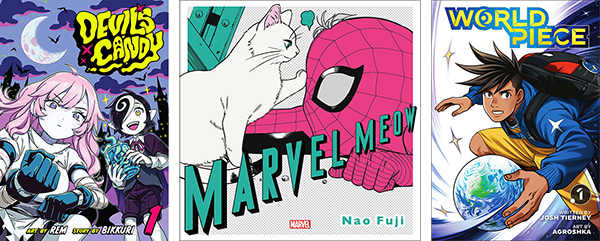
Viz Originals, an imprint launched by Viz in 2019 to publish original graphic novels by artists inspired by manga and anime, is off to a strong start with the manga adaptation of celebrated YA author Rainbow Rowell’s Fangirl, adapted by Sam Maggs and Gabi Nam, followed by two summer releases: World Piece, a sci-fi adventure series by Josh Tierney and Agroshka, and Devil’s Candy, a popular webcomic and supernatural high school comedy by REM and Bikkuri. Viz also recently announced a copublishing partnership with Marvel Comics to release English editions of Marvel stories created in Japan, starting in November with the release of Marvel Meow, featuring Captain Marvel’s “cat” Chewy, drawn by Nao Fuji.

TokyoPop is continuing its line of Disney-licensed manga releases as well as supporting a small but growing roster of original comics produced by a global stable of creators. Seven Seas Entertainment has partnered with HiveWorks, a graphic novel publisher and webcomic studio and platform, to release many of its popular webcomics in print editions—among them, the heartwarming LGBTQ fantasy Life of Melody by Mari Costa; Sleepless Domain by Mary Cagle, a magical girl drama; and Persephone: Hades’ Torment by Allison Shaw, a steamy Greek mythology–inspired romance.

Comics from South Korea have always been a part of the publishing mix at Yen Press, says editor-in-chief JuYoung Lee, who joined the U.S. house in 2007 after years working in the South Korean comics industry. “I can safely say that BTS had a huge impact,” Lee notes, “and Korean content itself is considered more ‘hip’ than ever before. We are getting a lot of interest from retailers on what’s coming from Korea. Webcomics have been a growing industry in Korea for a while now, and it has just exploded in recent years. This has allowed the webcomics platforms to go from seeking individual creators to establishing larger digital comics studios that can produce high quality content in a short period of time to keep up with the demand of readers who want to be able to quickly read the next story. The amount of content they can produce—and the quality—is really outstanding.”

Ten years ago, Lee explains, many American publishers tried to brand manhwa (or South Korean comics) as Japanese manga. “I was told that’s the way to go to sell Korean content,” she says. “Now people are actually looking for stories from Korea, which is a huge difference.”

Supply chain problems

Kevin Hamric, v-p, publishing sales at Viz Media (l.), Yae Sahashi, v-p of sales and marketing at Kodansha (r.).


Despite such impressive growth, selling more books can mean more problems. Manga publishers across the board report pandemic-related printing and shipping delays that have created shortages, just when demand for manga in print is on the rise.

“We just can’t get all the books we want to reprint right now, and the demand from the readers is higher than ever,” says Hamric.

Yen Press’s Hassler agrees: “Printer capacity issues were stretched last year, and the increase in sales this year has exacerbated the problem.”

Sentar laments, “This will likely be a problem for months to come, since demand isn’t going down! It’s a good problem to have, but we’re sorry for all the retailers and readers who have to wait longer than usual to access some print copies.”

Ed Chavez, publisher at the small indie manga house Denpa, says, “Even at the beginning of 2020, we were seeing about two to three weeks of additional lead time for first printings. Starting in fall 2020, we started seeing delays of four to six weeks from domestic printers.”

With limited capacity to print, publishers have had to make some adjustments and difficult decisions. “The first adjustment has been to try to get ahead of those titles that are so hot right now that we can’t keep up with demand, seemingly no matter how much we print,” Hassler says.

Meanwhile, at Viz Media, Hamric says, “We have to make decisions weekly as to what we can reprint and what will need to wait a while longer. We are in regular contact with our suppliers and looking at other possible solutions. The retailers are well aware of the situation, as it is an industry-wide issue and not confined to just our category. As of right now, I do not see how this will be resolved this year.”

Looking ahead

As the pandemic stretches on, many anime and comics conventions remain virtual only, or are in a “wait-and-see” mode as the number of vaccinated people rise and lockdown restrictions are eased. While the manga publishers we spoke with are optimistic overall, they remain wary of what kinds of changes to expect in a post-pandemic world.

Viz’s Hamric says he believes the upward sales trend will continue, though “it could be interrupted by how we start opening up the country, how people choose to spend their money, as well as how long the current printer issues continue.” He adds, “We hope that readers will continue with the new series they have started and we also hope that the new readers we have gained will start reading more series.”

Hassler says, “We don’t see any end in sight to strong sales in the category at the moment. I expect the rate of increase to taper, simply because you can’t maintain 100% growth exponentially, but I don’t see this as a short-lived spike.”

Kodansha’s Sahashi notes, “We feel very fortunate and excited to be publishing at a time when interest and enthusiasm for anime and manga is at an all-time high. And we have plenty of existing and upcoming series that we’re thrilled to share with fans looking for amazing manga content.”

According to Seven Seas’ Sentar, “Our hot titles are spread across many genres and formats, and demand for everything is up both for print and for digital formats. Although I’m sure we’ll see some peaks and valleys in demand this year as the world continues to adjust to Covid-19, I think a lot of this growth is here to stay. It’s been a wild year, but we have even more cooking, and we can’t wait to announce it.”

******************************************************* 

Check out my new book! 

And don't forget to subscribe

Sunday, 21 February 2021

Sawano Hiroyuki speaks


hiroyuki sawano

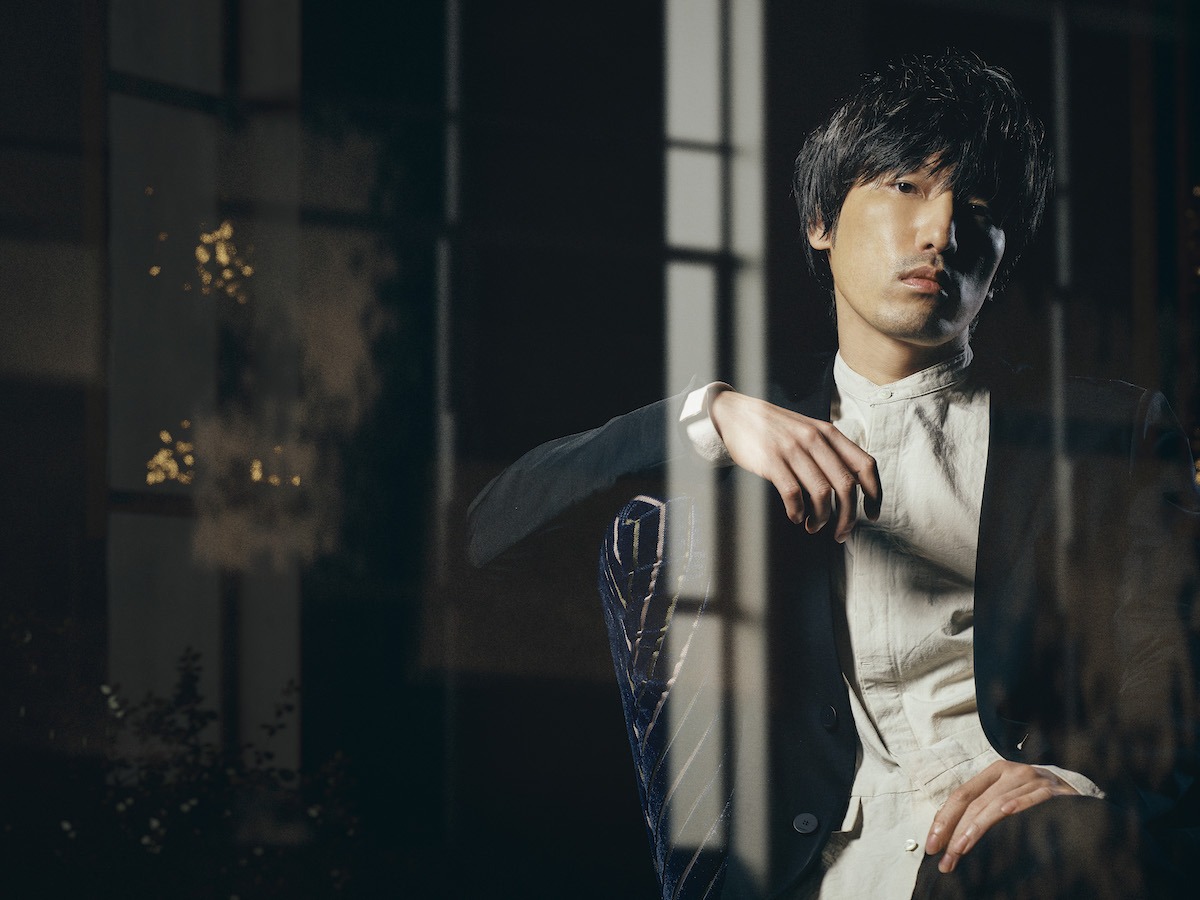
With the recent digital release of a bunch of composer Hiroyuki Sawano’s amazing anime soundtracks—including a physical vinyl release for his music that fueled TRIGGER’s unforgettable PROMARE anime film, the artist speaks about what composing for anime is really like. Read on to learn more about how Sawano-san got his start, what inspired him to make the type of music for which he’s known, and more.

***

You’ve created so many varied compositions for anime, games, and film over the years. How did you manage to get your start?

When I was a child I was first introduced to the music of Chage and Aska and was very impressed. From then on I aspired to be a musician and began exploring music by Tetsuya Komuro. His work as an artist, producer, and video musician prompted me to want to become a composer.  By high school, I began listening to Joe Hisaishi’s music for Studio Ghibli, which made me more interested in the world of film music, and I began to focus on creating instrumental music.

Were there any specific anime or film scores that moved you and made you want to become a composer yourself?

I’ve seen Ghibli films such as Princess MononokeKiki’s Delivery Service and Whisper of the Heart, as well as works by Takeshi Kitano such as Sonatine

How about outside of anime and film. What kind of music really motivates you, and do you have any favorite artists or groups?

I listen to a lot of international pop rock and soundtracks, such as Aerosmith, OneRepublic, Imagine Dragons, and Fall Out Boy. As for composers, Hans Zimmer, Danny Elfman, Ryuichi Sakamoto, etc.

When you first started composing specifically for anime, what stood out to you about the process? What makes it different from working on projects in other industries?

When I was in charge of the music for Mobile Suit Gundam UC, I set aside four months to concentrate on the production. I had never worked for that long of a time before, but I found it really rewarding to concentrate on a single piece of work. I started to value the production period as much as possible when working on new works after that. Personally, I don’t think there is much difference between producing music for animation and film.

You’ve created a lot of music for dramatic and intense series like Attack on TitanKingdom, and various Gundam projects. Beyond the iconic “Sawano Drop,” what’s your secret to making these soundtracks work so well with the action on screen?

Music for TV animation is created before the animation is completed, so it is rarely created in conjunction with the movement of the video. In the end, the director and sound director think about where the music will fit in and apply it. I try to make sound choices and arrangements that are more emotional for the audience based on the various scenes.

hiroyuki sawanoWe love your work on Kill la Kill and PROMARE! How was your experience collaborating with Studio Trigger?!

Every time I work with director [Hiroyuki] Imaishi, I am greatly inspired. The world view, direction, and characters that he creates are all energetic, which motivates me to create music and I really enjoy working with him.

With well over a decade of work in the anime industry, do you feel there have been significant changes along the way? How does your work today differ from when you first started your career?

What I feel has changed the most is that we are getting more responses from people overseas. On the work side, I feel that the awareness of my production overseas is getting stronger. I think I’ve been able to spend more time making music for each piece of work than when I started my career, and I’m convinced that I can proceed with conviction for each piece, one by one. Since I have gained the impression of creating vocal music, I am receiving more requests for such music.

What was it that first inspired you to launch your SawanoHiroyuki[nZk] project with Aimer back in 2014? Can you tell us a little bit about how that came to be?

I had been working on a lot of vocal music for soundtracks, and I wanted to start a project that would focus more on vocal music.

Your musical catalog is now available to a wider audience. Is there anything you’d like to say to those who are discovering your work for the very first time?

I would be happy if you could listen to it while remembering my work, and even more happy if you could listen to it with your own free imagination.

We’d like to thank Sawano-san for taking the time to speak with us about his music. You can find Hiroyuki Sawano’s music on digital platforms, and look for the PROMARE vinyl to drop on April 12. You can also see more at Hiroyuki Sawano’s official website.

PROMARE
©️ TRIGGER,Kazuki Nakashima/XFLAG

Source: Otaku USA magazine

My blog: Otaku Tokyo (otakutokyojp.blogspot.com)

Thursday, 25 January 2018

Lupin III creator Monkey Punch's new film project


Everyone’s favorite thief, Lupin III, turned 50 this year, and to mark the occasion, a new anime project has been greenlit. What’s more, the director will be none other than Monkey Punch, Lupin's original creator. 
According to Monkey Punch, the new anime pays tribute to previous Lupin III projects while also letting the staff try new things.
This will be the author's second directorial work: he previously directed Dead or Alive (1996).
To celebrate the event, I'm offering you this interesting interview with Monkey Pinch that was originally featured in Anime News Network. Enjoy.


How often have you had the opportunity to start work on a three month project, only to see it turn into a career that's lasted nearly thirty years? Katou Kazuhiko, better known to many as Monkey Punch, had that happen when he started a little manga called Lupin III. What started off as a loose collection of one shot comics has blossomed into a series featured in countless TV series, OVAs and movies. There's even talk of a live action movie.

I had the opportunity to sit down with the man known as
Monkey Punch at a little convention in Dallas, Texas called AnimeFest. Although one of the smaller conventions on the circuit, AnimeFest pulled in one of the great manga artists, distracting a bit from one of the other major conventions under a similar name.

Katou Kazuhiko sat down in a closed chat session, along with translator Jonathan Nawrocki and a group of journalists from Kyle Hebert.com, ANN and other publications, as well as a documentary crew from Strong Arm Productions. This is the conversation that ensued.

When did you first get started with drawing?


Monkey Punch's Lupin III
available from TOKYOPOP
I've been drawing manga since I was quite little, not necessarily manga in its formal sense, but little drawings here and there. Through my younger years I continued with scribbles and drawings in publications such as children's newspapers.

When I was in junior high school I started concentrating more on specific, so-called newspaper publications directed towards kids. And I continued doing that. Its not that it was anything official, but I believe many manga artists started the same way I did in creating those kinds of publications.

Then in junior high school I was writing manga strips for the school newspapers and a rivalry of sorts developed between myself and the other artists who were doing the same thing. It became a challenge; we kept trying to improve and to make our work better. Before you knew it there were these collections of our work that started to accumulate. And actually, one of my ‘rivals’ also became a professional manga artist. We started young, and a lot of people followed us.

Sometimes when we would actually get something published in a magazine we would actually receive a prize or reward of some sort. Receiving that was actually a part of the inspiration or motivation to draw manga.

Sometimes, there were cash prizes as well, but often it was merchandise. So you could say in a way that, in my junior high school years, I had a part-time job writing manga. But at that time, despite all of this, I never really thought I would become a professional manga artist.

After all these years, what appeal still exists in Lupin that allows you to continue working on that series?

I guess you could say that part of the appeal is that my works have been directed at the youth of the nation and of the world, the younger generation, so in a sense, I wasn't really ever restricted with political barriers. It was easy for me to continue writing and drawing in that sense because it was freedom.

So, speaking of freedom, I mean, it's just like when Lupin goes abroad, overseas, you never really see him have a passport. There are no boundaries for him, he's a free roamer.

I'm drawing him as a character, where he can go wherever he wants whenever he wants without any obstacles. And that's the appeal for me.

Of the characters, who do you most relate to and why?

So actually, I would probably have to say Lupin, without any doubt, it must be Lupin, I mean, everything about him kind of appeals to me.

Actually, I kind of project my desires, my interests through Lupin, he's a thief and a criminal in that regard, but I'm using that as more of a setting. What I really like about Lupin is his freedom, his boundless freedom that allows him to do whatever he wants whenever he wants and never really be tied down to anything or anyone in particular. I think I want that for myself in my own work when I do my own jobs, so for that reason, Lupin is by far the character I most relate to.

Even though I relate to Lupin the most, I really, really like Zenigata. Zenigata is Lupin's fiercest opponent, his personality, his ultra-strict, ultra-rigid, “protect every rule” personality, in a sense is something that also really appeals to me. I really like how the contrast comes out between Lupin and Zenigata in my work. That whole combination of things really, to me as a manga artist, is what I strive for.

Do you enjoy exploring other worlds beyond the ones you've created already?

Absolutely, without a doubt. I really do enjoy it. I guess you could perhaps say that it's my curiosity, but wherever there's a crowd gathering, anywhere there's a group of people bustling about something, I always tend to stick my neck in and say, "hey, what's going on?" I'm really curious about things like that. And I also enjoy looking at creations other than my own to use in my own study for my own works.

Do Lupin and Fujiko ever get together, or are they fated to continue to tease each other?

Actually, it's kind of interesting. I think men and women in general as... rather than saying tease, say they enjoy each other. They use their attributes; Fujiko uses her beautiful body and her sex appeal as a weapon and Lupin uses his cunning and his wit as a weapon and they like going at it with each other in a fun sense. Not necessarily lovers, not necessarily husband and wife, but more just having fun as man and woman with each other and using their weapons against each other, but in an enjoyable way. That's how I think of that.

So even, I mean, I fight with my wife, too, but we have fun when we fight, it's not an all-out brawl!

How do you feel about Lupin's growing popularity in America?

When I started drawing Lupin thirty-six years ago, I was really only supposed to draw him for 3 months. It was more of only a contract project. At the end of that 3 months, it became popular and I continued drawing it for 10 years. And over that time, I never expected that I'd be invited to America multiple times, to attend these conventions, have so many fans and people that have read my works and have come to talk to me and express their gratitude. It's really an amazing feeling and at the same time it's bizarre in a way. I don't understand the popularity. I'm happy for it, but I don't understand it.

Is there anything you feel Americans may be missing out on in any of your works?

Yes, I do think there are some things that don't come across, especially the humor. There's a lot of Japanese humor that doesn't make it outside of the country and is not felt the same way. However, I think its not just America, I think it's worldwide. I think there are a lot of different cultures that do affect how people interpret my work. But it's not something I really worry about too much.

Any words of advice for those looking to create their own manga?

If I was to give some advice, I would have to say there are a lot of good artists today. But, at the same time my art isn't necessarily the best art there is. I would say “Don't concentrate just on drawing.” It is probably more important is that is to have a story that fits well with modern times, with your day, and to keep that in mind when you draw your work. Also, don't over-concentrate on one thing, try to diversify. Learn a little about many different things, it'll probably help you more in the long run.

For example, when I was younger and I started writing manga, we only had pen and paper. Today, there are all sorts of different mediums with which to express yourself creatively. Although it's important to continue to figure out ways to improve in your chosen medium, be it digital manga, be it traditional manga, I think its more important still to keep your readers in mind, your audience in mind when you create your work.

Your questions are Pretty Tough.

Regarding his early Inspirations

I would probably have to say as far as inspirations are concerned, maybe some of the more famous mystery works, just worldly mystery works. I think they probably helped me out creating my stories quite a bit.

Even things like, you know, Treasure Island or Monte Crisco, I think even those works influenced me quite a bit. I even enjoyed reading about D'Artagnan from the Three Musketeers. It might be my own analysis, but I even feel that Lupin might be very similar to D'Artagnan. M'lady the character that comes out from the D'Artagnan stories, I think that person might even be similar to Fujiko. So, those kinds of works I really think they did affect me at an early age.

In 1967, when the publication of Lupin the 3rd began in Manga Action Weekly, you were also involved with another series called Pinky Punky, was there any pressure working on 2 mangas simultaneously?

Not really, I didn't feel much pressure at all. All my works kind of are similar in a way. I do enjoy making outlaws my main characters. I wrote Pinky Punky as a female outlaw, and even Lupin is an outlaw, so no, I didn't feel much pressure at all. So instead of writing about a heroic character, a good guy, I really enjoy writing about bad guys so much more.

What drew Monkey Punch to the mystery Genre?

Just like I mentioned a little while ago, I really like riddles, puzzles, mysteries and even, you know, the Agatha Christie movies and novels. I like Columbo. I'm a big fan of Mission Impossible so I've even taken hints from those different programs and series and included them in my works.

How did the name Monkey Punch come to be?

To be honest, I don't really like the name Monkey Punch, I never have. Actually, the way I got this name was from the editor of the magazine that discovered me when I was writing doujinshi. He chose the name for me. I really don't know how he came up with it, but I couldn't really refuse him or disagree with him, so it just kind of stuck, and I've been stuck with it now for 36 years.

Actually my editor told me just keep the name for a year, keep writing for a year and then we could figure things out, so I was like “Ok”. So, I wrote for a year, then Lupin became popular and I couldn't give up the name, so now it's stuck for 36 years. As I mentioned earlier, Lupin was originally supposed to be a 3 month project, had Lupin not become successful I'm sure that after less than a year that name would have disappeared.


Katou Kazuhiko Answers a quesion

What is it like to see your creation, Lupin, Animated?

I'm happy to see that it's been animated, however anime and manga are quite different and when a company approaches and asks to create an animation of my work, I really just want them to create something that is good. I'd like to leave the animating to the animators, the professionals. It's not my field of expertise and so when it comes down to it, I'm pretty much, well, “Make it good,” and I leave it up to them. So, you know, the directors will go ahead and make their own Lupin and add a twist to their own Lupin character and I enjoy watching those.

I particularly like Miyazaki's Castle of Cagliostro. I really enjoy that work and I just like him and another famous manga artist in Japan, Testegawa-sama, their works, I enjoy them from a distance. I don't try to do it myself; I enjoy it from a distance.

What was it like to direct your own Lupin Movie?

I really don't want to talk about this too much.

Basically, in the case of Dead or Alive, which is the movie I directed, it wasn't something I wanted to do on my own. I was approached to do it, we were on a real tight time-crunch. The movie was produced in 5 months and basically it was decided that this movie was going to be made and they didn't have a director so I unwillingly accepted the role. However I feel it was the voice actors and the other people involved in the project that saved it.

The one thing I learned from doing this is that, more than even myself drawing manga by myself, it took more than a thousand times the energy to produce and direct this movie. And I really don't want to do it again.

Regarding any new anime or manga Monkey Punch is developing?

It's not a TV series, or anything right now, but there is something new that I'm working on. In Osaka, there is a national citizen's museum. In 2004 there is going to be an Arabian Nights display and I'm creating an animation for that. It's actually going to be done in Computer Graphics, CG, and NHK is producing it. So I'm sure it will be ultimately broadcast on NHK, but for now it'll be at the exhibition.

There are pretty good stories in Arabian Nights and this one is about a black horse. It's currently about 50% finished. There's actually a portion of that, that they are talking about making 3-D where you would need the special glasses.

What kind of information can visitors find at your website, MonkeyPunch.com?

Right now, it hasn't been updated in a while, there's not a lot of new information you gain from the site, however my plans for it in the future, probably the next two years is to have a digital manga series on it. Me personally, I'm more in the preparation stage, getting ready to do this project, so please, look forward to it.

One of the dreams I have, one of the things I would really like to see happen in the future, is more of a collaborative effort using the internet community getting other artists in Japan and perhaps from other countries to come together and create a masterpiece.

What is J-Mac (Japanese Manga Artists Club)?

It's kind of an interesting thing, J-Mac. It wasn't really ever meant to be a club, it wasn't a group I formed to invite people in, its more a couple of people I knew who were using Macs to do artwork and I gave them a call, and say, hey, want to get together for a little bit, and before you knew it, it had 1500 members! They're not all manga artists, they're just people that are into art on the Mac, but that's kind of what it is.

There's something else I would like to let everyone know about, in addition to J-Mac there is something else I created called Digital Manga Group. This is a group where I've invited many professional manga artists including Leiji Matsumoto of Galaxy Express 999, Go Nagai of Devil Man and Cutey Honey, Terasawa Buichi of Cobra and Goku - Midnight Eye, Tsukasa Hojo of City Hunter and a female artist by the name of Sato Naka. We're in the preparation stage, but this is a completely professional digital manga group I've brought together and hopefully we'll be able to create some fantastic things for everybody. And ultimately I'd like this to expand beyond the borders of Japan to other countries to other professional comic book artists that want to use the digital medium. I would love for them to come and join our group. Sony and various game companies have taken an interest in our group; they want to learn a lot more about us, so we're just now starting talks with them. So hopefully, this will be something big.

Do you have any plans to retire?

No plans whatsoever; I'll draw manga until I die! It may not be on paper, it may be on the computer. I've actually gone back to university studying digital art, digital computers further to hopefully further my self and hopefully further a movement in Japan for digital manga. I will continue writing until I die.


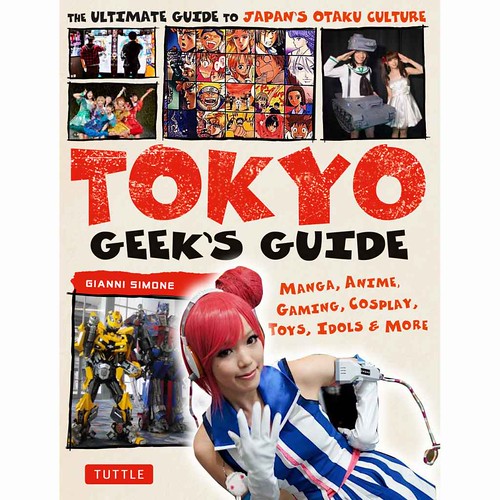
If you want to know where to find classic manga and anime in Tokyo, have a look at my Tokyo Geek's Guide.
 You can read here the latest review: https://otakutokyojp.blogspot.jp/2018/01/tokyo-geeks-guide-update.html
By the way, if you already have a copy and you liked it, an Amazon rating/review would be greatly appreciated.  https://www.amazon.com/Tokyo-Geeks-Guide-Cosplay-Ultimate/dp/4805313854/ref=pd_rhf_ee_p_img_1?_encoding=UTF8&psc=1&refRID=PJPEKT7NESXKMP4AC83R
And a big thank you if you have already done it!


Sunday, 8 October 2017

Wandering Educators interview

I was interviewed by Dr. Jessie Voigts of the Wandering Educators website.

We mainly talked about my otaku background, and why and how the guide was born.


Do you love cosplay, manga, anime, fandom memorabilia, and toys? Perhaps the center of your fandom universe lies in Tokyo, Japan. If so, you probably identify as Otaku. If you are otaku, or can relate to it, then I have the book for you! If you aren't into otaku culture yet, you soon will be, after reading Tokyo Geek's Guide: Manga, Anime, Gaming, Cosplay, Toys, Idols, & More, by Gianni Simone. Be forewarned: I LOVE THIS BOOK.Love Tokyo's Otaku Culture? Read this.
"Tokyo is ground zero for Japan's popular "geek" (otaku) culture - a phenomenon that has now swept across the globe. This is the most comprehensive guide ever produced to Tokyo's geeky underworld. It provides a comprehensive run-down on each majoy Tokyo district where geeks congregate, shop, play, and hang out - from hi-tech Akihabara and trendy Harajuku, to newer and lesser-known haunts like chic Shimo-kita and working-class Ikebukuro."


What Simone has created is marvelous - his Tokyo Geek's Guide is the best guidebook I've ever read. He's an author that wears many hats in this book - travel guide, translator, sparker of interest, photographer, fan, wiki, a guide to Japanese language and culture, and otaku. When you combine all this expertise into one book, that book is a shining lodestar for fans of otaku culture. Reading it is like coming home - and finding a slew of new cousins had moved in. You're simultaneously delighted, intrigued, and want to stay up all night talking, discovering, laughing. 
Here's what I love about this book:
* It clearly explains the many aspects of otaku fandom
* It's a complete travel guide to many areas of Tokyo that are unusual, hard to discover, and often not in English
* Delving deeply into each neighborhood, the book gives clear directions, information, and inspiration
* The photos are inspirational - not only for traveling to and around Tokyo, but to up your otaku game
* Don't know what to do, how to order, how to play, or other cultural norms and mores? Simone has outlined everything so clearly that you feel comfortable in a new place - even calling it your own, once you've got it down
* It helps you find your tribe - even if that tribe is halfway around the world

As you may surmise, highly recommended.

We were lucky enough to catch up with Simone, and ask him about the book, inspiration, interest in otaku culture, the joys and challenges of research, and more. Here's what he had to say: 


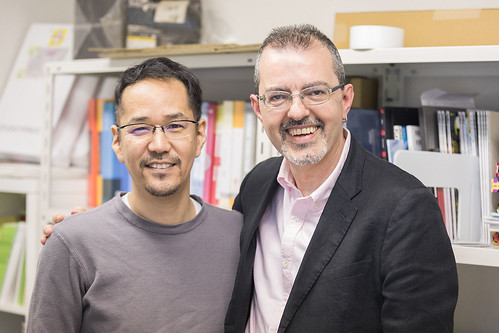
Gianni Simone and "Napping Princess" director Kenji Kamiyama. Photo: Benjamin Parks. From Love Tokyo's Otaku Culture? Read this.
Gianni Simone and "Napping Princess" director Kenji Kamiyama. Photo: Benjamin Parks


Please tell us about your book, Tokyo Geek's Guide...
This is an otaku guide to Tokyo. I tried to cover every side of otaku fandom as well as I could. The first chapter briefly introduces each of the six main otaku genres (manga, anime, video games, toys, cosplay, and idols) from a historical perspective. It provides a few tidbits of trivia and cultural insight (e.g., how Akihabara evolved from a hub for radio enthusiasts to the modern-day gamer haven it has become) while highlighting Japan's influence abroad and trying to point out how each genre may evolve in the future.  

This is followed by the book's main, travel guide part. In each chapter (devoted to one of Tokyo's major otaku areas) I show interesting things to see and do – not only things to buy but anime-related spots, cosplay and other otaku events, manga museums, and libraries. The main difference from your typical travel book is that I actually guide the reader on a walk through each area in a sort of geeky urban exploration.
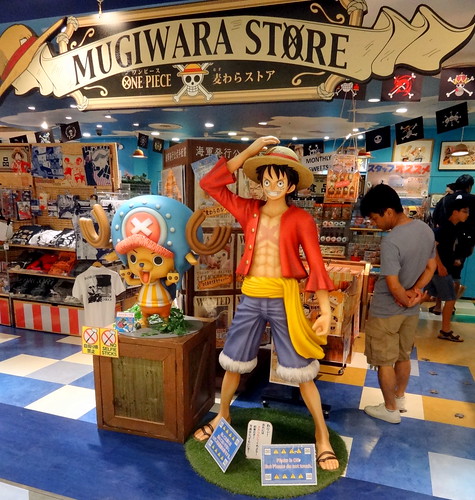
One Piece Mugiwara Store in Shibuya. From Love Tokyo's Otaku Culture? Read this.
One Piece Mugiwara Store in Shibuya
 
What inspired you to write this book?
This project was born from my personal need to find otaku-related information. While there are hundreds of general travel guides on the market – some of them covering very specialized subjects – I discovered that nobody had ever covered Tokyo from an otaku point of view. There are many people who are more knowledgeable than me, but they apparently prefer to dig deeper and pen books on manga philosophy or the moe concept. Entry-level otaku and people who just want to explore Tokyo are left with surfing the Internet for information. Of course, now you can find a lot of things online, but the Internet can be very dispersive and unreliable. Also, a lot of important information is still only available in Japanese. So I decided to gather all these loose ends and put them together in book form.  

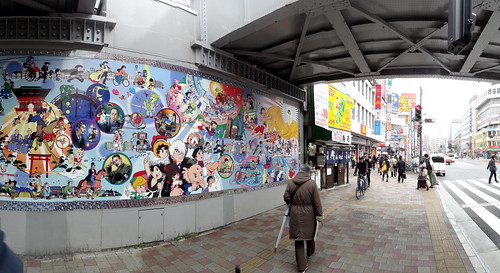
Tezuka Productions mural in Takadanobaba, Tokyo. From Love Tokyo's Otaku Culture? Read this.
Tezuka Productions mural in Takadanobaba, Tokyo
 
What is your background (and beginning interest) in otaku culture?
I belong to the very first generation of European anime fans. The first Japanese TV series (Grendizer, Mazinger Z, Heidi, etc.) appeared in France and Italy (my home country) back in the summer of 1978, when I was in junior high school. I still remember my shock the first time I saw those alien-looking sci-fi anime that were seemingly coming from another planet. At the time, my family used to have dinner in our kitchen which doubled as a dining room. But our TV was in the living room, and Grendizer (Goldrake, as it was called in Italy) was broadcasted at dinner time. So my parents (bless them) let me eat my food alone in the living room.

What might readers be surprised to learn about otaku culture, and general geekdom in Tokyo?
What a trip to Tokyo really makes apparent is how much otaku "sights and sounds" are part of Japanese life, from giant billboards and graffiti to the jingles in some train stations. Manga- and anime-inspired imagery is so pervasive it can literally be found everywhere and is used to sell products, as well as advise people on socially sensitive issues.

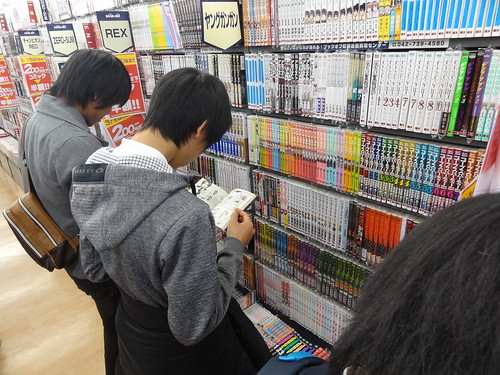
Fans spend hours reading their favorite manga in bookstores... without buying them. From Love Tokyo's Otaku Culture? Read this.
Fans spend hours reading their favorite manga in bookstores... without buying them
 

Another thing worth noting is how few concessions Akihabara and other otaku districts make to mainstream western tastes. Though local shops welcome the growing number of foreign customers, many if not most of the things they sell are for local hardcore fans, which means you will probably discover many things you have never seen—which is not necessarily a bad thing. Even as far as Western pop culture is concerned, there is precious little to be found except what the Japanese themselves like (i.e., Star Wars and Disney).
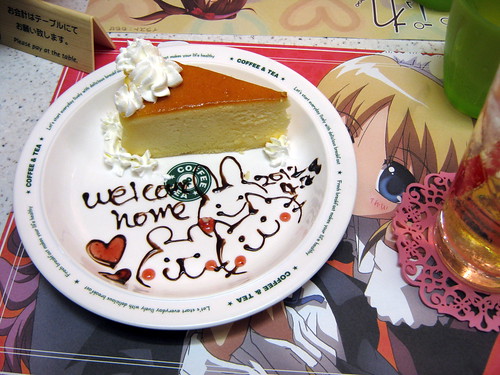
Maid cafe food. Photo: La Japonie Facile. From Love Tokyo's Otaku Culture? Read this.
Maid cafe food. Photo: La Japonie Facile

We're all about the research - what were the joys and challenges of finding SO many cool things that you've included in this book?
I would say for many writers the planning stage (when the book slowly takes shape) and the actual research are the most interesting parts. The writing itself, in comparison, is a sort of anticlimax (George Orwell famously went so far as to say that writing a book can be "a horrible, exhausting struggle"). For me, researching the book was like going on a sort of treasure hunt, so it was a lot of fun. This said, dealing with Japanese red tape can be exhausting. For each copyrighted image I wanted to use in my book, I had to exchange endless mails with companies, museums, etc. Luckily, my Japanese wife helped me navigate this Kafkaesque maze.

What's up next for you?
The Tokyo Geek's Guide has gathered a lot of positive feedback, so I'm already working on another otaku-related project. However, geek culture is not my only interest, and I hope to be able to publish a different kind of book in the near future; a sort of oral history of Tokyo based on my journalistic work.

Is there anything else you'd like to share?
 I'm a regular contributor to Zoom Japan magazine (let's say I'm their main Man in Japan). Anybody who is interested in all things Japan should definitely check out our website: www.zoomjapan.info. Last but not least, if readers of my book have any feedback to share (either good or bad) they can reach me at bero_berto[at]yahoo.co.jp.  


Here's the link to the original post:
https://www.wanderingeducators.com/best/traveling/tokyo-otaku-culture.html


Tokyo Geek's Guide is available here:
https://www.amazon.com/Tokyo-Geeks-Guide-Cosplay-Ultimate/dp/4805313854/ref=sr_1_1?s=books&ie=UTF8&qid=1507453332&sr=1-1&keywords=tokyo+geeks+guide